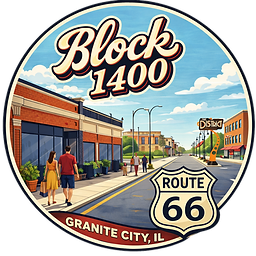
Sometimes Creativity Is the Attraction

Not every community has mountains.
Not every town sits beside the ocean or has waterfalls, canyons,
or natural wonders people travel across the country to see.
Some places were simply handed geography that makes people stop.
Others have to think differently.
And I think more communities are starting to realize that.
For years, tourism was often tied to the obvious things.
Nature.
Landmarks.
History.
Major attractions.
But today, people are searching for something else too.
Something memorable.
Something unexpected.
Something worth pulling over for.
That’s why you’re seeing more murals, immersive art, quirky roadside attractions, public spaces designed for photos, giant sculptures, restored neon signs, creative downtown districts, and places that lean into personality instead of perfection.
Not because communities are trying to be ridiculous.
But because they’re trying to be remembered.
And honestly, I think there’s something hopeful about that.
Many small towns and overlooked places are being forced to ask themselves difficult questions.
Who are we now?
What makes us unique?
Why would someone stop here instead of somewhere else?
And the answer isn’t always found in what a community naturally has.
Sometimes it’s found in what people are willing to imagine.
Because not every place can compete by being bigger.
Some places have to compete by being memorable.
Tourism today isn’t just about sightseeing.
It’s about experience.
People want stories.
Photo opportunities.
Unexpected moments.
Places that make them smile, wonder, laugh, or feel nostalgic for something they can’t quite explain.
And sometimes creativity itself becomes the attraction.
I know not everyone understands that right away.
A giant sculpture or oversized roadside prop can seem silly at first glance.
But maybe silliness isn’t always a bad thing.
Maybe joy matters too.
Maybe giving people a reason to explore a place they otherwise would have driven past matters too.
And underneath all of it is something even bigger.
Because if communities can’t see value in who they are and what makes them unique, how can they expect anyone else to?
I think the places people remember most are rarely the ones trying to look like everywhere else.
They’re the places willing to lean into their stories, their history, their weirdness, their creativity, and their sense of identity.
The places willing to become something unexpected.
Communities don’t become destinations overnight.
They become destinations because somebody cared enough to imagine more for them.
Even when other people couldn’t see it yet.
And maybe that’s what placemaking really is.
Looking at an ordinary space and choosing to believe it can become part of someone’s memory.
Comments